Itineraries · 6 days · Nagaland
6D5N Benreu, Khonoma & Kohima — full itinerary
An extended village circuit linking the Benreu cliff village, Khonoma, Kohima and the Khezhakeno heritage site.
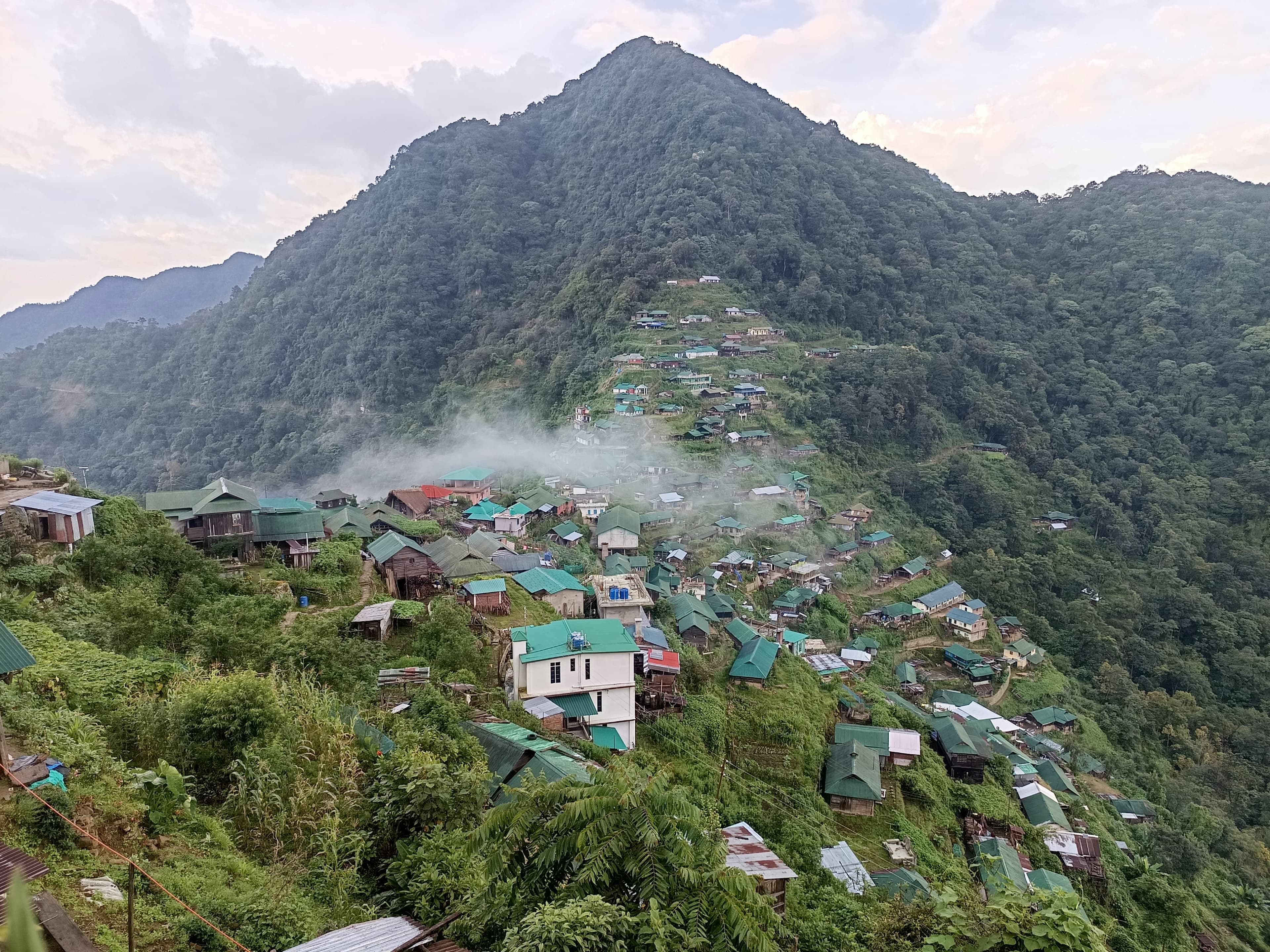
Day 1 — Dimapur – Benreu
Meet a representative at Dimapur Airport, the commercial hub of Nagaland, get surface transfer to Benreu Village.
Benreu village is home to a vibrant and culturally rich community primarily composed of the Zeliang Naga tribe, specifically the Zeme Naga community. Benreu village, with its rich cultural heritage and diverse ecosystem, represents a unique blend of traditional knowledge and natural beauty. The local community's sustainable practices and growing conservation efforts play a crucial role in preserving this ecological gem. As eco-tourism and awareness continue to grow, Benreu stands as a model for integrating cultural preservation with environmental stewardship.
Overnight stay in Benreu Homestay.
Day 2 — Benreu – Dzuleke - Khonoma
After we proceed to Khonoma village the first Green village in India via Dzuleke villege.
.Overnight stay at Khonoma.
Day 3 — KHONOMA - KOHIMA
- History and Culture: Khonoma boasts a 700-year-old history and is home to the Angami Naga tribe, known for their bravery and vibrant traditions.
- Battle of Khonoma: The Angami tribe famously resisted British colonial rule for decades, culminating in the "Battle of Khonoma" in the late 19th century.
- Sustainable practices: Khonoma is a model for sustainable living, with widespread organic farming, terraced cultivation, and a strict ban on hunting and logging within the sanctuary.
- Community involvement: The success of Khonoma's conservation and development initiatives is rooted in its strong social and political structures, including the Village Council and youth associations, which actively promote community participation.
- Eco-tourism: Khonoma attracts tourists interested in experiencing a unique blend of nature and Naga culture, including homestays, traditional cuisine, guided nature walks, and opportunities to learn about sustainable farming methods.
Khonoma is a picturesque village in Nagaland, India, renowned for its commitment to environmental conservation and its rich Angami Naga cultural heritage. It has earned the distinction of being India's first “Green village” in India due to its villagers dedication to sustainable practice and wildlife preservation.
. Morungs: The traditional morung, or boys' dormitory, serves as a center for education and cultural preservation, teaching young men about warfare, sports, craftsmanship, and social responsibilities..
Day 4 — KOHIMA
- Kohima War Cemetery: A poignant tribute to the soldiers who sacrificed their lives during the Battle of Kohima in World War II.
- Kisama Heritage Village: Showcasing the diverse cultural heritage of the Naga tribes, especially during the annual Hornbill Festival.
- Nagaland State Museum: A treasure trove of artifacts, traditional costumes, and tribal art, offering insights into Naga culture.
- Mary Help of Christians Cathedral: Known for its unique architecture and the 16 feet high carved wood crucifix, one of the largest in Asia.
Kohima is the capital city of Nagaland, a state in Northeast India renowned for its diverse indigenous tribes and vibrant culture. The city, originally called Kewhira, is nestled in the Naga Hills at an altitude of 1444m above sea level. It gained historical significance during World War II as the site of the Battle of Kohima, which played a crucial role in halting the Japanese advance into British India.
. Naga Bazaar: Explore local markets for unique handicrafts, textiles, and traditional Naga products.
Overnight stay in Kohima.
Day 5 — KOHIMA – KIGWEMA - KISAMA
After we drive to Khezhakenoma Village(one of the oldest village in Nagaland) Khezhakeno Village is one of the tourist attractions and is widely renowned for its historical significance. The village was the home to the ancestors of the Nagas. It used to be home for several different tribes which dispersed and migrated over time to other parts of North-East India. To extend your cultural knowledge about Nagaland, the place to visit is Khezhakeno Village. Being the birthplace of the Nagas, Khezhakeno receives a lot of attention on the front of historical significance and can prove to be an excellent way to know about how the Nagas came to be.
Day 6 — KOHIMA – DIMAPUR
After breakfast we journey down to Dimapur to connect the flight for onward journey
Questions about this itinerary
Can it be customised? Yes — this is a starting plan, not a fixed package. We shift days, swap villages and adjust the pace to your group.
What about permits? Indian nationals need an Inner Line Permit for Nagaland and we file it as part of the booking. Foreign nationals need PAP registration. Read the ILP guide.
Where does the cost start? It depends on group size, stay type and season. Our 2026 Nagaland cost breakdown has the numbers, and send us your dates for a quote specific to this route.
Want this as a trip? Plan your Nagaland trip — share dates and group size, we send a custom itinerary in 24 hours. Or browse all itineraries and the photo gallery.
Other itineraries
11D10N Nagaland Comprehensive Tour
Ten nights across Nagaland covering the major valleys, Angami and Konyak heritage villages, Dzukou Valley and Kohima.
15 days · Nagaland15D14N Nagaland with Hornbill Festival
The full Nagaland journey timed to the Hornbill Festival at Kisama Heritage Village, with tribal nights, treks and Kohima stays.
6 days · Nagaland2026 Hornbill Festival Itinerary
A dedicated ten-day Hornbill Festival (1-10 December) package covering all sixteen Naga tribes, the night carnival and Kohima.